By Bill Lindo
Belize City: Oct 1st 2022: — In the next two weeks or so, The National Assembly will meet to change the Constitution of Belize – changing it from “her majesty” to “his majesty”. It would be the right time to adjust a few things in the constitution that would deepen democracy.
I am proposing that we use this time to amend the constitution and allow members of the House to “walk the floor”. Belize had done this before. Hon. Philip Goldson did not die as a UDP but as the leader of NABR. We are facing a crisis of true democracy. The opposition is weakened, and its leadership seems intent on quashing all resistance.
We can address the more holistic changes I propose below when we embark on the more in-depth revision, in eighteen months or so. We should finish the work that George Cadle Price started by amending the Preamble of our Constitution by adding the following:
- That policies of state must promote the economic independence of Belize by pursuing strategies and programmes of self-reliance, greater production and innovation, which stimulate a dynamic partnership between the government and the private sector, so that the ownership and control of our natural resources and national treasures are so managed as to secure maximum ownership and benefit for the Belizean people.
- That the creation of money and control thereof in all its forms, including the national currency is, and remains the sole responsibility of the people through their elected representatives.
- That it is the sacred duty of government to intervene actively in the economic life of the nation in order to achieve full employment and the eradication of poverty and secure a better life for all Belizeans.
George C. Price used to say that political Independence is just the beginning. We need financial independence and economic independence. The final goal of economic and financial independence is George C. Price’s Mixed Economy.
The Mixed Economy of George Price’s PUP rests on eight fundamental Principles,
- Exploiting nature rather than men. All our schools teach both in business and economics classes that it’s okay to exploit your fellow man. Yet most citizens of Belize cry that they are Christians, eventhough they know that it wrong to cheat, to steal, to exploit their fellow humankind. Slavery is the institutional organization of exploiting man by other men. Belize as a British colony/neo-colony has always exploited men rather than nature. This concept has been at the heart of the difference between Price’s Mixed Economy, and the British and other European systems of exploitation of slavery and other forms of exploitation for over ten thousand years. Make no mistake, the Mixed Economy of Price is to make the phrase “man made in the image of his Creator” a reality. Take a look at the sugar belt in the North of Belize. The local cane farmer is paid about $ 55/ton for sugar cane. The cost under normal conditions to produce that ton of cane is about $ 53.00. So, the cane farmer is being cheated by the giant foreign multi-national company. If instead, nature was exploited by the use of technology (5, below) and agricultural productivity (6 below), a high income would be paid to the cane farmers.
- Tariff Protection of local agriculture and manufacturing because free trade has always benefitted the strong at the expense of the weak.Every single country in today’s world that has become an industrial nation-state and provided a high standard of living to their citizens have done it by practicing trade protection of infant industries and agriculture. In fact, the recent Covid-19 crisis showed that nearly every country was practicing protection of their local production to protect the workers of their respective countries, because of the massive dislocation of their economies. Neo-liberalism has failed. A few years ago a local Mennonite farmer decided to manufacture disc plows in Shipyard, Belize. He imported steel from the United States. He paid an average of 22% in duties and taxes on the steel imports. But the same disc plow imported from Brazil was selling about 18% cheaper. Why? The imported plow paid no duty nor taxes. Our oligarchy stopped that farmer from becoming a local manufacturer and keeping our money at home for the benefit of Belizeans. The policy of the oligarchy in Belize as in colonial times, as it is today, is to prohibit local manufacturing.
- High wages to workers, because as E. Peshine Smith, wrote: “In order to make labour-cheap, the labourer must be well-fed, well-clothed, well-lodged, well-instructed.” Over the last 150 years political-economists have known that the cheapest worker in money-terms is not necessarily the cheapest in economic terms. At the end of the day, money-wages is paid for knowledge, and knowledge is expensive because while the worker is learning, he has to be fed, clothed, and given shelter. In fact, higher money-wages usually tend to increase productivity in the economy such that unit-prices tend to decrease — leading to higher standards of living.
- Money creation is a public utility and should be under the control of elected representatives of the people, not controlled by private individuals for private gain and control. For thousands of years the act of money creation was an act of the sovereign. It was only in the last 200 + years that private individuals were given the authority to create new money. The power to create new money from the air is an omnipotent power to be given to individuals. It is tantamount to the power of life and death. Humans make other humans their enemies, and to give your enemy the power of life and death over you is just ludicrous. This is why the National Bank of Belize is absolutely necessary. We can use the National Bank to create new money to invest in our farms, factories, fishing coops and other useful ventures necessary for our development, especially today when Covid-19/war destroyed our national economy.
- Technology and innovation always causes new methods to enter production and thus profits and wages don’t diminish but instead leads to higher productivity and thus higher wages to workers. Therefore the theory of Diminishing Returns is not valid to physical reality. Young people taking their first classes in economics must be at a lost to understand what their teachers are saying: in a capitalist society no matter what you do capitalism has built-in the process that profits must fall as capitalism increases. This stupid theory has been repeated by all the British economists from as far back as Rev. Thomas Malthus, David Ricardo, Marshall, and John Keynes. In fact, Keynes said that the best way to postpone this dreadful day is not to invest in productive activities such as building two railway lines from York to London, but instead better to build two pyramids – two tombs for the dead. Technology is the invention of something new, especially the application of scientific knowledge to develop new machinery and equipment. Technology doesn’t solely mean the use of computers as is presumed today. Originally, it referred to the branch of knowledge dealing with engineering or applied science. Now there is a concept called the “Machine-tool Principle” which is the key to applied engineering/technology. This is where the theory and the practical fuse and become one. Therefore, technology and innovation leads to higher productivity, thus increasing both profits and wages, leading to a harmony of interests – not class warfare.
- A view of soil fertility and agricultural productivity as a product of capital investment – not nature. Science is the way to solve the problem of “mining the soil”. This concept goes back to the opposition of the Americans to both Ricardo and Malthus. Those British economists preach that man when he first settles the soil goes first to the best soil, then eventually to the worst. After the better soil is settled and your country runs out of good soils, then your country must take up arms – guns and conquer other countries – create colonies to exploit. The greatest economist, the American, Henry C. Carey in his many books and articles concluded that the early settler did not settle first on the best soil, but instead on the inferior because he physically could not work the best soils. He didn’t have the machinery. This was easy to prove in the early American settlements, and more important, the soil as given by nature will become depleted after time. The crops will extract the minerals, vitamins, etc. from the soil. Science has shown that these minerals, especially phosphorus, nitrogen, calcium, sulphur can be replaced so that with the use of capital – minerals (fertilizers) are replaced in the exact quantities and qualities require by nature to grow a nutrient-dense product leading to healthy citizens.
- Public infrastructure as a means to lower costs in an industrial society by introducing new methods of production and communications, and the public support of research and development. Agriculture and manufacturing industries need a glue to hold them together. That glue is infrastructure. There is both soft and hard infrastructure. Education and health are examples of soft industries. Both are absolutely necessary in our society. Then there is the need for hard infrastructure: roads, bridges, canals, dams, buildings, and so forth. The problem for Belize is that we listen to our foreign instructors too much, and forget the meaning of the word — independence. We need to stop importing materials for our infrastructure projects and start making them ourselves, such as cement and steel. In September 2019, China opened the Hong Kong-Zhuhai-Macau bridge and tunnel. Most Western engineers said this modern wonder could not be done; it was an impossible task. After 7 years, USD $ 20 billion, and the issuance of 1,600 patents the impossible was done. New types of steel, including stainless steel, new heavy-duty cranes, and new welding methods made the impossible possible. Those new methods will now be part of the Chinese economy which means their productivity will increase tremendously, leading to lower unit costs prices and higher wages to workers. This is how infrastructure causes a nation-state to create happiness among its citizens.
- Government intervention in an economy. Government as the “brain” must put a bridle on corporate bodies, and must establish the pursuit of happiness as a natural right of citizens. In Belize this principle is enshrined in the PUP’s Constitution as a sacred duty of government to create full employment and end poverty.The propaganda we hear every day goes something like this — the private sector is the engine of growth. The government does nothing, just steal from the productive private sector that produces wealth. Belize got its political Independence on September 21st 1981. Before we were a colony of Great Britain so we had certain restrictions to follow. But for the last 41 years the Belize private sector could do whatever it wished. What manufacturing industries have been created? How has the standard of living increased by the investment of the private sector in the local economy? How many new jobs were created by the private sector? The truth is that Belize’s private sector created very few new jobs. They created a few manufacturing industries. When Belize got political independence the rate of poverty was about 23%. By the year 1998 it climbed to about 33%, by 2009 it was at 43%, and by 2018 it was at 52%. And with Covid-19 it is estimated to be some 58%. That is the legacy of the private sector. And in March of 2020, it was revealed that 5% of Belizeans owned some 75% of all the cash on deposits in the banks. Young people, the less-educated and people of colour in Belize don’t own stocks, bonds, or real estate. They sell their time by the hour and the real hourly rate has scarcely changed since 1981. The rich get richer. The poor and middle classes get poorer. With a poverty rate of 58%, expect more corruption, more dependence, more depression, more poverty, and more unfairness. This is why George Cadle Price wrote that it is a sacred duty of government to intervene in the economy because only government as the “brains” of economy can put a bridle on corporate bodies to create full employment and the eradication of poverty.
The above is a short description of the principles of George C. Price’s Mixed Economy. I dare say that if we Belizeans put the above eight principles of Mr Price’s vision in our Constitution, Belize will have one of the best constitutions in the entire world, and a better Belize, for all of us.
Is it not time to finish George Cadle Price’s dream?
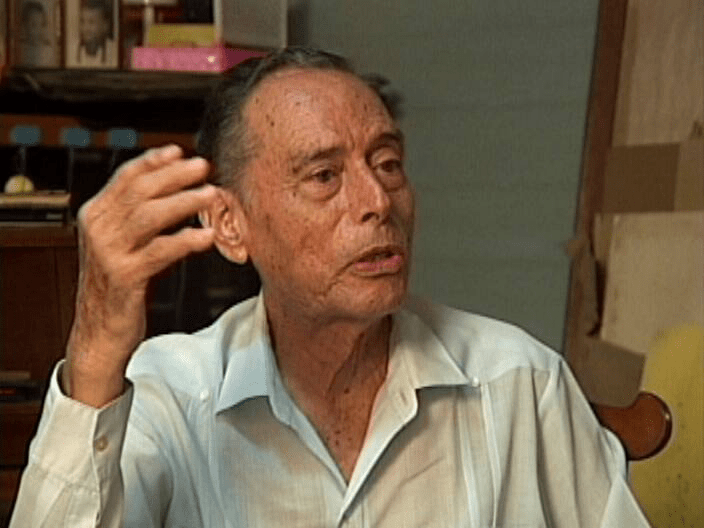
George Cadle Price, Father of Belizean Independence
 Bill Lindo blog